How Do You Get Cheap SR22 Insurance if You Are a Student or Young Driver With a DUI?
- 4 days ago
- 12 min read
You get cheap SR22 insurance as a student or young driver with a DUI by comparing quotes from at least five carriers that specialize in high-risk filings, dropping to liability-only coverage if your vehicle is older, and claiming every discount you still qualify for, including good student and defensive driving credits. The single biggest lever is carrier choice, because two companies looking at the same 20-year-old with the same conviction can quote rates that differ by thousands of dollars a year. That is not an exaggeration, and the data behind it is straightforward.
Here is the part nobody tells you at the courthouse. A DUI at 20 costs far more than the same DUI at 40, and it is not because insurers are punishing you twice. Your base rate was already the highest in the market before the violation, so the surcharge gets applied on top of a number that was steep to begin with.
That math feels unfair when you are paying tuition, rent, and a car payment on a part-time income. It is also survivable, and the drivers who handle it well tend to do three specific things in the first thirty days. This guide covers all of them, plus the mistakes that quietly double the damage.
Why a DUI Costs Young Drivers So Much More Than Older Drivers
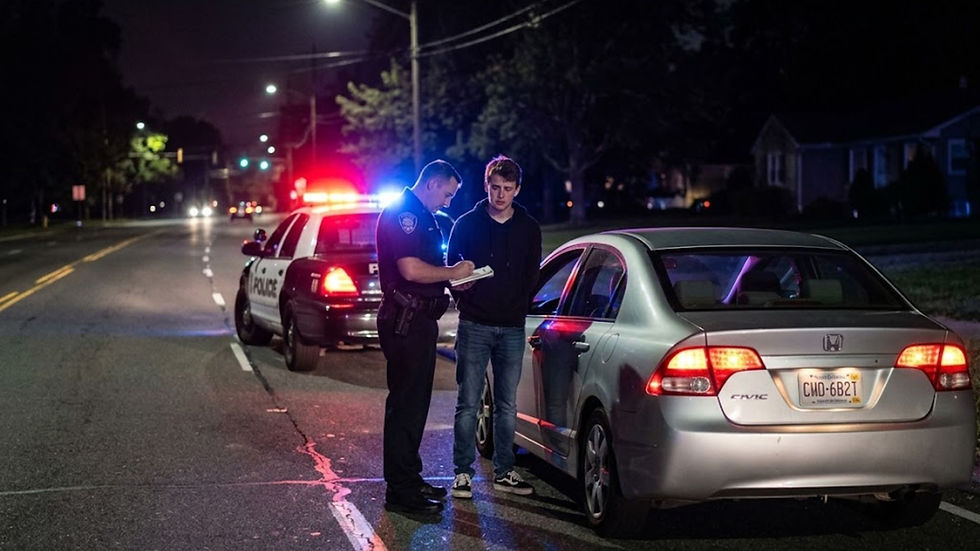
A DUI raises a typical 20-year-old driver's annual premium by roughly $2,532, compared with about $1,427 for a typical 50-year-old, according to LendingTree's analysis of Quadrant Information Services rate data pulled in May 2026. The percentage increase is actually smaller for young drivers, at about 68.9 percent, but the dollar figure is larger because the starting point is so much higher.
That same analysis showed 20-year-olds moving from an average of $3,673 per year to $6,205 after a single conviction. MoneyGeek's 2026 rate study reached a similar conclusion from a different angle, finding that young drivers with a DUI pay approximately $6,001 annually versus $2,430 for adults, roughly two and a half times as much for the same violation.
The Three Factors Stacking Against You at Once
Insurers price risk in layers, and a young driver with a DUI triggers three layers simultaneously. Understanding which ones you can influence tells you where to spend your effort.
Age and driving experience. Drivers under 25 carry higher base rates because limited years behind the wheel correlate with more frequent claims. You cannot change this, but it fades every year.
The violation itself. An impaired driving conviction is weighted more heavily than almost any other single event on a record, second only to a hit-and-run in most carrier models.
The high-risk classification created by the filing. This narrows the number of companies willing to quote you at all, which reduces competition and keeps prices high.
Only the third factor is fully within your control right now, and it is controlled entirely through where you shop rather than how you drive. That is why comparison work matters more in your situation than in almost any other.
What an SR22 Filing Is, and Why Under-21 Drivers Get Caught by It So Easily

An SR22 is a certificate of financial responsibility that your insurance company files with your state motor vehicle agency to confirm you carry at least the minimum required liability coverage. It is not a policy or a type of insurance you buy. The filing fee itself is minor, typically a one-time charge of $15 to $50 per policy term, and it is not what drives your premium.
Florida and Virginia use a different form called an FR-44 for impaired driving convictions, and it requires liability limits well above the state minimum. That distinction matters financially, because a driver in Florida pays more than a driver in Ohio with an identical conviction, purely because the mandated coverage is broader.
Zero Tolerance Laws Mean a Smaller Mistake Triggers the Same Paperwork
Every state enforces a zero tolerance law for drivers under 21, with per se blood alcohol limits generally set between 0.00 and 0.02 percent, according to FindLaw's state-by-state review. For comparison, the adult threshold is 0.08 percent, which means the underage limit is often one quarter of it or lower.
The practical effect is significant. In California, Vehicle Code section 23136 sets the limit at 0.01 percent and carries a one-year license suspension for drivers between 18 and 21, with no proof of impairment required. In Florida, a reading of 0.02 percent triggers an automatic six-month suspension. Maryland applies the same 0.02 threshold under its transportation code.
This is why so many students end up needing a filing after what they considered a minor lapse in judgment. The Illinois State Police note that drivers under 21 make up about 10 percent of licensed drivers but are involved in roughly 17 percent of alcohol-related fatal crashes, which is the statistical reason these laws exist and the reason insurers price the age group the way they do.
How to Get Cheap SR22 Insurance as a Student or Young Driver
Cheap SR22 insurance for a student or young driver comes from carrier comparison first and coverage adjustments second, in that order. The spread between insurers on the same profile is larger than any discount you will be offered, which means shopping is the highest-return hour of work available to you.
Insurify's 2026 data illustrates the point clearly. Among carriers writing policies for drivers with a DUI, the cheapest option came in at approximately $124 per month for full coverage while the most expensive reached $683 per month, a gap of $559 monthly on the same driver profile. ValuePenguin's 2026 analysis found a comparable pattern among major national carriers, with one large insurer raising full coverage rates by an average of $61 per month after a DUI while another raised them by $329 per month.
Work through these steps in sequence rather than picking and choosing:
Gather five quotes minimum, not two. Include at least two carriers that specialize in high-risk and non-standard policies, since standard carriers often decline the business or price it punitively.
Quote identical coverage every time. Same liability limits, same deductibles, same term length. A cheaper quote with thinner limits is not a cheaper quote.
Compare the total annual cost, not the down payment. Low deposits with high monthly figures are common in this market and frequently cost more over twelve months.
Ask each carrier how far back they look. Underwriting lookback periods range from three to five years, and finding a company with a shorter window can change your rate immediately.
Confirm the carrier files the certificate in-house. Companies that handle filings internally submit faster and reduce your risk of a paperwork gap.
Working with a specialist agency shortens this considerably, which is why many drivers start with the high-risk coverage team at SR22 Savings rather than calling national carriers one at a time and hearing five declines before a single quote.
Should You Stay on Your Parents' Policy, Get Your Own, or Go Non-Owner?
This is the decision that moves the most money for students, and the right answer depends on whether you own a vehicle and whether you live at your parents' address. All three paths are legitimate, and one of them is dramatically cheaper if it fits your situation.
Coverage path | Typical cost impact | Best suited for | Key limitation |
Own policy in your name | Highest cost, but full independence | Students who own a titled vehicle and live away from home year round | You absorb the entire surcharge with no household discounts to offset it |
Remaining on a parent's household policy | Often lower than a standalone policy due to multi-policy and household credits | Students whose permanent address is still the family home and who drive a family vehicle | The surcharge raises the entire household premium, and some carriers may non-renew the whole policy |
Non-owner SR22 policy | Lowest cost of the three, frequently a fraction of an owner policy | Students who do not own a car but still need the filing to satisfy the state | Covers you only in vehicles you do not own, with no coverage for a car titled to you |
The non-owner option is the most commonly missed opportunity among college students. If you sold your car, left it at home, or never owned one, a non-owner policy satisfies the state filing requirement at a much lower price, and MoneyGeek's 2026 comparison found non-owner filings from major carriers priced near $33 per month in some cases. You can still legally drive borrowed and rented vehicles under that coverage.
If you are staying on a parent's policy, have an honest conversation about the trade-off first. The household premium will rise, and the increase can be substantial enough that a separate policy in your own name occasionally works out better. Reading through verified customer reviews before choosing an agency is worth the ten minutes, because service quality in this market varies as widely as pricing does.
Discounts That Still Apply After a DUI
Most discounts survive a DUI, and student drivers happen to qualify for several of the strongest ones. Insurers rarely volunteer this information, so you need to ask for each credit by name.
Good student discount. Many carriers offer a meaningful credit for full-time students maintaining a B average or better. This is one of the few advantages of your situation, and it is frequently overlooked by drivers who assume a violation disqualifies them.
Defensive driving course completion. At least 34 states permit insurers to offer credits of 5 to 15 percent for an approved course, according to the National Safety Council. Courses typically cost $20 to $100 and take four to eight hours.
Telematics and usage-based programs. Safe driving tracked over six months can reduce premiums by 10 to 30 percent based on 2026 carrier rate filings. This is the single best tool available to a young driver, because it lets you prove current behavior rather than being priced solely on past behavior.
Low mileage or student away at school. If your car stays parked at a campus most of the week or sits at home while you attend school elsewhere, say so. Annual mileage below roughly 7,500 miles often triggers a credit.
Paid in full and automatic payment. Installment fees add up quickly on high-risk policies, and paying a full term upfront removes them entirely.
Multi-policy bundling. Combining auto with renters insurance is realistic for a student and commonly yields a credit in the 15 to 25 percent range at major carriers.
Stack as many of these as you can qualify for, because they compound against the surcharge rather than replacing it. Keeping your billing current is equally important, and setting up automatic policy payments protects you from the one mistake that undoes all of this work.
Mistakes That Make an Already Expensive Policy Worse
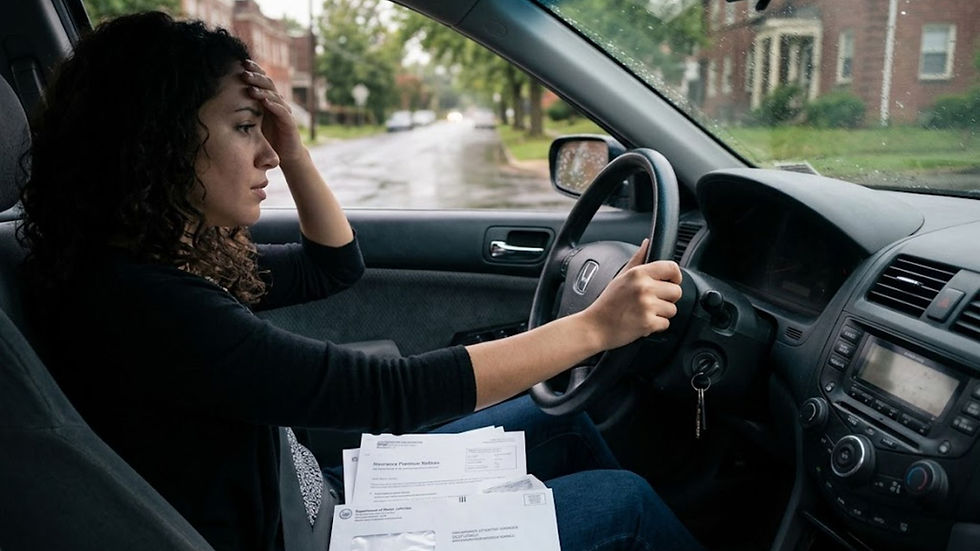
Four errors account for most cases where a young driver pays far more than necessary, and each one is entirely avoidable with advance knowledge.
Letting coverage lapse for even a day. Your insurer is legally required to notify the state when SR22 coverage ends, using a form commonly called an SR-26. In most states that notice posts to your record within one to three business days and can trigger a fresh license suspension plus a restart of your entire filing period. A declined debit card is the most common cause.
Canceling the old policy before the new filing posts. When switching carriers, confirm the new certificate has been accepted by the state before terminating the previous policy. Overlap by a few days deliberately. The cost of overlapping is a few dollars, and the cost of a gap is measured in years.
Assuming your current insurer will keep you. Some carriers non-renew drivers after an impaired driving conviction, and a non-renewal notice arriving thirty days before your term ends is a bad time to start shopping. Begin comparing quotes the week you learn a filing is required.
Skipping the paperwork on collateral consequences. A DUI can affect scholarships, financial aid eligibility, and standing under a university conduct code, and some professional licensing boards in fields like nursing and education review criminal records closely. Handling the insurance while ignoring the academic side leaves the larger problem unaddressed.
How Long the Surcharge Lasts and When It Starts Dropping
Insurers weight a DUI most heavily during the first three years, then typically reduce rates by 10 to 25 percent annually once your filing period ends and you avoid new violations. Most states require the filing for three years of continuous coverage, though the record itself lasts longer than the rate impact.
The difference between those two timelines confuses a lot of drivers. In California a DUI remains on the driving record for ten years, in New York for fifteen, and in Florida for seventy-five, yet in each of those states most carriers stop applying the heaviest surcharge after three to five years. What stays on paper and what affects your bill are separate questions.
Your age works in your favor here in a way it does not for older drivers. As you move from 20 to 23 to 25, your base rate falls independently of the violation, so two improvements happen at once. A driver who keeps a clean record through the filing period often sees a larger total drop than an older driver in the same situation.
Practical habits that speed this up:
Re-quote your policy at every renewal instead of allowing it to auto-renew, since pricing does not update in your favor on its own.
Enroll in a telematics program early so you have six to twelve months of favorable data before your next renewal.
Maintain continuous coverage without gaps, since prior insurance history is weighted heavily in underwriting.
Ask specifically whether your carrier reduces rates at the twelve-month mark, because some do and some wait for the full term to end.
How SR22 Savings Helps Students and Young Drivers Facing a Filing
SR22 Savings focuses specifically on drivers who have been flagged as high risk, including students and drivers under 25 who are dealing with a filing requirement for the first time. That focus matters because finding affordable SR22 coverage for a young driver with a DUI is a different exercise than finding standard insurance, and the carriers that price this profile competitively are not the ones running national advertising campaigns.
The practical help covers the parts that go wrong most often. That includes identifying which carriers accept drivers under 25 with an impaired driving conviction, determining whether a non-owner policy satisfies your state's requirement, sequencing a carrier switch so the certificate never lapses, and confirming the filing posted correctly with the state before you rely on it.
Drivers who prefer to see numbers before speaking with anyone can start with an online quote comparison and use the result as a baseline for every other conversation they have. Knowing what a fair rate looks like for your age, state, and violation is most of the negotiation.
Frequently Asked Questions
How much does SR22 insurance cost for a student or driver under 25?
Young drivers with a DUI and an SR22 filing pay approximately $6,001 per year on average, compared with about $2,430 for adults, based on MoneyGeek's 2026 rate analysis. The filing fee itself is only $15 to $50 per term. Actual quotes vary widely by state and carrier, and the same driver can receive quotes hundreds of dollars per month apart, which is why comparing at least five companies is essential.
Can I stay on my parents' insurance policy with a DUI and an SR22?
Often yes, particularly if your permanent address is still the family home and you drive a vehicle titled to a parent. Household and multi-policy credits can make this cheaper than a standalone policy. Be aware that your surcharge raises the entire household premium, and some carriers may decline to renew the full policy rather than just your portion, so confirm the carrier's position before assuming it is an option.
Do I need SR22 insurance if I do not own a car in college?
Yes, if the state or a court ordered the filing, the obligation applies whether or not you own a vehicle. A non-owner SR22 policy satisfies the requirement at a much lower cost than an owner policy and still covers you while driving borrowed or rented cars. Dropping coverage entirely because you have no vehicle will trigger a cancellation notice and likely a license suspension.
Will a DUI affect my financial aid, scholarships, or college standing?
It can. Many universities maintain student conduct codes that address off-campus criminal charges, some scholarships carry conduct conditions, and licensing boards in fields such as nursing, law, and education review criminal history during credentialing. Address the academic and licensing side alongside the insurance side rather than treating them as separate problems.
How long will I have to keep SR22 insurance and pay higher rates?
Most states require the filing for three years of continuous coverage, with some extending to five years for repeat offenses. Insurers apply the heaviest surcharge during the first three years, then commonly reduce rates 10 to 25 percent per year once the filing ends and your record stays clean. Any lapse in coverage during the required period can reset the clock to day one.
The Bottom Line
Getting cheap SR22 insurance as a student or young driver with a DUI comes down to five actions: compare a minimum of five carriers including high-risk specialists, choose a non-owner policy if you do not own a vehicle, drop to liability-only coverage on an older car, claim every discount by name including good student and telematics credits, and never let your coverage lapse for a single day. None of those require money upfront. All of them require you to act rather than accept the first quote you receive.
The surcharge is temporary and your age advantage is permanent, in the sense that every year you get older your base rate improves whether you do anything or not. Combine that with a clean record through the filing period and the rate you are quoted today is not the rate you will be paying in three years.
Start with your state's exact filing requirement, then gather quotes the same week. The drivers who end up paying the least are simply the ones who treated the first thirty days as a research problem rather than a punishment.
Comments