What Are the Most Common SR22 Insurance Filing Mistakes Sacramento Drivers Make?
- Jul 21
- 11 min read
The most common SR22 insurance filing mistakes Sacramento drivers make include letting coverage lapse, confusing an SR22 form with standard auto insurance, miscalculating the official three-year start date, and selecting the wrong policy type. Additional frequent errors involve driving before official state license reinstatement and failing to update vehicle schedules. Avoiding these critical pitfalls allows drivers navigating SR22 insurance Sacramento requirements to maintain valid driving privileges, prevent costly legal penalties, and keep auto premiums as affordable as possible.
Restoring your driving privileges in Northern California requires exact compliance with the California Department of Motor Vehicles (DMV). Even minor administrative oversights can trigger an immediate suspension of your driver's license and reset your mandatory filing timeline back to day one. Understanding the legal rules, documentation requirements, and carrier processes ensures a smooth path back to total driving freedom.
What Is an SR22 Certificate and How Does It Work in California?
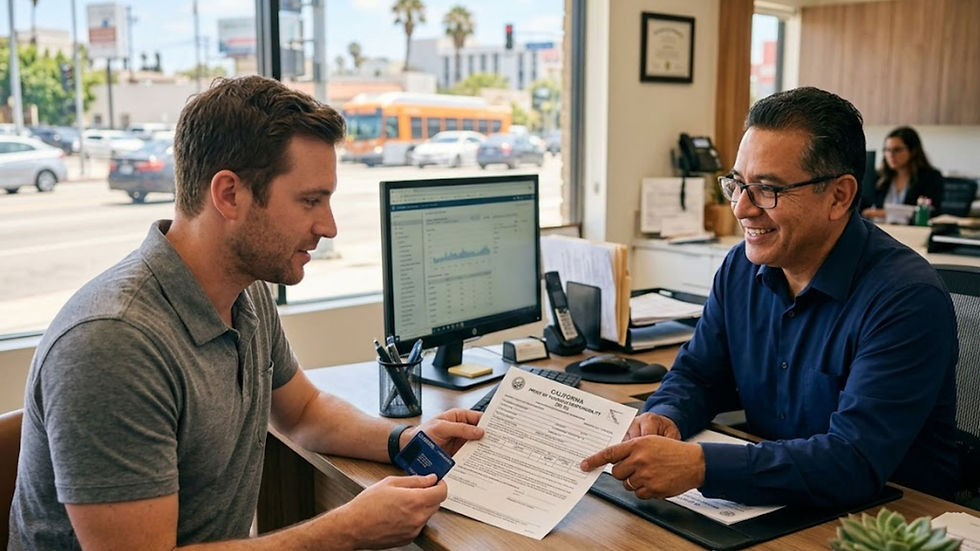
An SR22 is not an actual auto insurance policy, despite how frequently people refer to it as one. Instead, it is an official administrative endorsement attached to an active auto liability policy that proves financial responsibility. Your insurance company submits this certificate electronically directly to the California DMV on your behalf.
The certificate serves as formal verification that you carry at least the minimum state-mandated liability coverage. In California, standard liability limits require coverage for bodily injury per person, total bodily injury per accident, and property damage liability. The state system tracks this certification continuously to ensure high-risk drivers remain fully covered while operating motor vehicles on public roadways.
When the state mandates an SR22 filing, your insurance company acts as an official guarantor to the state. If your policy cancels, lapses, or undergoes significant changes, your insurer is legally obligated to inform the state immediately. This notification mechanism allows licensing authorities to enforce mandatory financial responsibility laws across Sacramento County and statewide.
Mistake #1: Allowing Coverage Lapses and Triggering an SR26 Notice

Allowing policy coverage to lapse is single-handedly the most damaging mistake a driver can make during their required filing period. California law requires high-risk filings to stay active without a single day of interruption for the entire duration specified by the state or court system.
When a payment is missed or a policy cancels for any reason, the insurance carrier must instantly file an SR26 form with state authorities. The SR26 acts as an official notice of cancellation, informing the state that your financial responsibility certification is no longer active. Upon receiving this form, state systems automatically initiate a driver's license suspension.
Consequences of an SR22 Lapse:
Instant Electronic SR26 Cancellation Sent to California DMV
Automatic Revocation / Re-suspension of Driving Privileges
Mandatory Reset of the 3-Year Compliance Period Back to Day One
Incurring Additional Reinstatement Fees & High-Risk Surcharges
Beyond the immediate loss of driving privileges, a coverage lapse usually resets your mandatory three-year filing period back to the beginning. That means two years of continuous compliance can be completely erased by a single missed payment. Enrolling in automated monthly payment portals helps eliminate payment delays and safeguards your driving record against accidental lapses.
Mistake #2: Miscalculating the Mandatory Three-Year Filing Start Date

A widespread misconception among Sacramento drivers is that the mandatory three-year filing period begins on the day of a traffic arrest or court conviction. Assuming your timeline starts on the incident date often leads to premature policy cancellations that result in unexpected suspensions.
In California, the mandatory clock begins strictly on the date your driver's license is officially reinstated by the state agency. If your arrest occurred in January, but your license was not reinstated until June after completing court mandates, your three-year compliance clock begins in June.
Arrest or Citation Date: Does not count toward your compliance duration.
Court Conviction Date: Establishes legal penalties but does not start the administrative filing clock.
Official DMV Reinstatement Date: The exact date your mandatory three-year compliance clock begins.
Canceling your filing prior to reaching 36 full months from your official reinstatement date will trigger an SR26 non-compliance flag. Always verify your exact completion date with state records before making any modifications to your coverage plan.
Mistake #3: Selecting the Wrong Policy Type (Owner vs. Non-Owner Coverage)

Selecting an incorrect policy structure is a major error that can leave you financially unprotected and legally non-compliant. High-risk filings generally fall into two primary categories: owner policies and non-owner policies.
An owner policy covers specific vehicles owned by and registered to the driver. A non-owner certificate is designed specifically for individuals who do not own a vehicle, do not have regular access to household vehicles, but still need to satisfy state licensing reinstatement requirements.
To determine the correct certificate for your situation:
If you own a car or have regular access to household vehicles, you need an Owner Policy, which is tied to specific VINs and includes physical damage coverage.
If you do not own a vehicle or have regular access to one, you need a Non-Owner Policy, which provides non-owned liability and covers you when driving borrowed cars.
If you purchase a non-owner policy while owning a vehicle or regularly driving a family member's car, insurance claims can be denied in the event of an accident. Furthermore, insurers can cancel the policy for material misrepresentation. Working with specialized agencies like SR22 Savings agency services helps ensure that your policy structure matches your actual vehicle usage and vehicle ownership status.
Mistake #4: Driving Before Official DMV Reinstatement Is Finalized
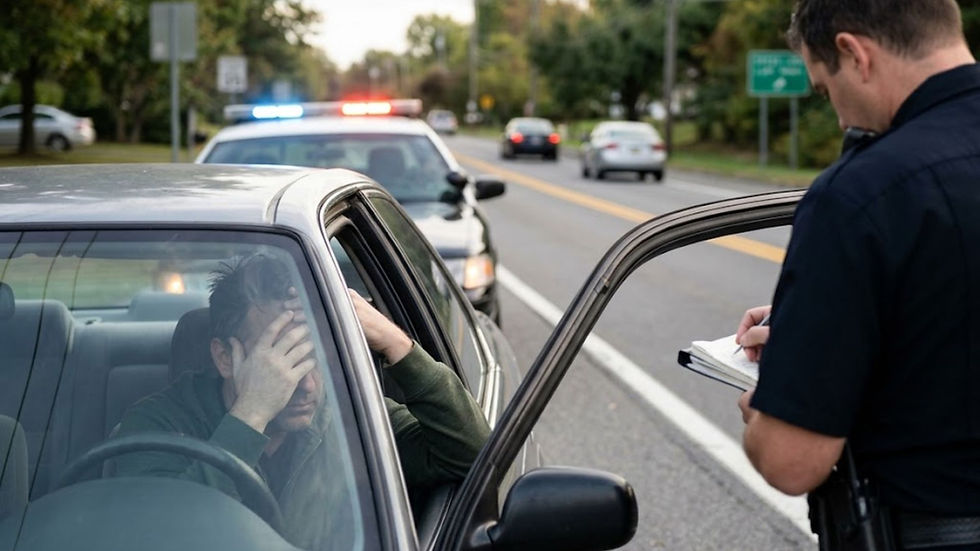
Purchasing a policy and receiving proof of filing does not instantly grant you legal authorization to operate a motor vehicle. Getting behind the wheel immediately after buying a policy is a dangerous mistake that can lead to severe criminal penalties.
Even though insurance carriers transmit filings electronically, state processing systems can take several business days to process paperwork, clear hold flags, and update driver records. Operating a vehicle before state systems reflect an active, reinstated status can result in a citation for driving with a suspended license under California Vehicle Code 14601.
To ensure you stay fully compliant with Northern California laws, always complete these verification steps before driving:
Wait for your insurer to confirm electronic transmission acceptance from state systems.
Log into the official state driver portal to confirm your license status displays as valid.
Visit a local field office in the Capitol region or call state administrative services to verify reinstatement.
Keep physical and digital copies of your official proof of financial responsibility in your vehicle.
Mistake #5: Switching Insurance Providers Without Cross-Filing Coverage

High-risk drivers often shop around for lower premiums during their three-year requirement, which is a smart financial strategy. However, switching carriers without properly overlapping filings creates dangerous coverage gaps.
If you cancel your existing policy before your new provider successfully submits an active endorsement to the state, an automated cancellation alert will be generated. Even a gap of a few hours can result in a license suspension notice.
To smoothly transition between carriers, explore dedicated Sacramento SR22 insurance policy options to secure your replacement policy first. Ensure the new carrier submits your certificate to state authorities and receives official confirmation before cancelling your existing policy.
Mistake #6: Confusing the SR22 Insurance Filing with an SR-1 Accident Report

Another common area of confusion involves confusing an SR22 financial responsibility filing with an SR-1 accident report. While both are official state forms handled by licensing authorities, they serve completely distinct purposes under the California Vehicle Code.
An SR-1 form is a mandatory accident report that must be submitted within 10 days of any vehicle collision occurring in California that results in bodily injury, death, or property damage exceeding $1,000. Filing an SR-1 is required regardless of who was at fault in the collision.
Parameter | SR22 Certificate | SR-1 Form |
Primary Purpose | Proves continuous financial responsibility liability coverage. | Reports a motor vehicle accident involving injury or $1,000+ damage. |
Who Submits It | Submitted electronically directly by your auto insurance company. | Submitted by the driver or legal representative involved in the crash. |
Submission Deadline | Required prior to license reinstatement; maintained for 3 years. | Must be submitted within 10 calendar days of the accident event. |
Key Trigger | DUI convictions, APS suspensions, uninsured driving, point accumulation. | Any traffic crash meeting injury or property damage thresholds. |
Consequence of Omission | Immediate driver's license suspension or denial of reinstatement. | Mandatory license suspension under CVC 16004 for failing to report. |
Filing an SR-1 report after an accident does not fulfill or replace an SR22 requirement. Conversely, maintaining an active high-risk filing does not exempt you from submitting an SR-1 form if you are involved in a qualifying traffic collision anywhere in California.
Mistake #7: Misunderstanding Household Driver and Vehicle Schedule Rules

Failing to properly list all household members and household vehicles on your auto policy is a significant oversight. Insurance policies are legal contracts that require full disclosure of all regular drivers living at your physical address.
If you omit household family members or roomates to keep premiums artificially low, insurance providers may apply unlisted driver exclusions. If an unlisted household member drives your vehicle and gets into an accident, the insurer can deny coverage entirely.
A claim denial caused by material misrepresentation not only leaves you personally liable for damages, but it also prompts the carrier to cancel your policy immediately. This cancellation triggers an SR26 notice, leaving you with a suspended license, resetting your compliance clock, and creating major administrative hurdles.
Mistake #8: Failing to Maintain Out-of-State Compliance During Relocation
If you move out of Sacramento County or relocate to another state, your obligation to fulfill California's financial responsibility requirements does not automatically vanish. Assuming that moving across state lines cancels your filing duty is a mistake that causes serious nationwide consequences.
California participates in national driver information networks, including the Interstate Driver License Compact. If your California license becomes suspended due to an SR26 non-compliance notice, your new state of residence will block you from obtaining a local driver's license.
Notify State Licensing Authorities: Inform the California DMV of your out-of-state address change.
Maintain State-Compliant Limits: Secure an out-of-state policy that explicitly satisfies California liability limits.
Verify Cross-State Filings: Ensure your insurance company can electronically submit an out-of-state certificate directly to California systems.
Obtain Official Approvals: Never drop your filing until state authorities formally confirm your out-of-state compliance clearance in writing.
Mistake #9: Canceling the Certificate Early Without Official DMV Written Confirmation
Completing 36 consecutive months of high-risk compliance feels like a major milestone, but canceling your filing without formal confirmation from the state is risky. Insurance systems do not automatically remove the requirement on your 3-year anniversary without administrative processing.
If you manually cancel your endorsement before state records update, your policy cancellation will trigger an automated SR26 notice. The state system will treat this as an unapproved coverage drop, resulting in an unexpected license suspension notice in the mail.
To safely finalize your requirement, obtain a free online insurance quote for standard auto coverage first. Contact state driver management representatives to confirm your high-risk requirement has officially ended, and receive written authorization before removing the endorsement from your policy.
Mistake #10: Overpaying by Accepting the First High-Risk Premium Quote
Receiving a high-risk driving designation often leads to anxiety, causing many drivers to accept the first high premium quote they receive. Believing that all insurance companies charge the exact same elevated rates for high-risk coverage is a costly mistake.
Insurance providers evaluate risk using unique, proprietary rating models. While one carrier may dramatically increase premiums for driving violations, another carrier specializing in non-standard insurance may offer significantly lower rates for the exact same driver profile.
Rate Discrepancies: Premiums for high-risk coverage can vary by hundreds of dollars annually between providers.
Specialty Carriers: Insurance agencies that focus specifically on state filings can access specialized non-standard rates.
Discount Eligibility: High-risk drivers can still qualify for discounts, such as defensive driving course credits or multi-policy bundles.
Failing to compare multiple options leaves money on the table. Taking time to review market rates allows you to secure full legal compliance while keeping your ongoing auto insurance expenses manageable.
Navigating SR22 Insurance Sacramento Requirements: Essential Guidelines for Local Drivers
When securing SR22 insurance Sacramento motorists must recognize that timing and accuracy are everything. Living and driving in Northern California presents unique commuting demands, from navigating heavily traveled corridors like Interstate 80, Highway 50, and Business 80 to managing daily parking in downtown Sacramento. Having a valid, fully reinstated driver's license is essential for maintaining your employment, fulfilling family responsibilities, and preserving your daily schedule.
Working with an agency experienced in Northern California filing procedures ensures that your documentation moves through administrative channels without frustrating delays. Specialized agencies streamline the submission process, verify that your liability limits match state guidelines, and confirm that your paperwork is accepted electronically by state systems.
By keeping your personal information current, keeping track of payment deadlines, and addressing changes in your driving habits proactively, you can navigate your required filing period smoothly and focus on driving safely.
Practical Ways to Reduce High-Risk Insurance Premiums
While carrying a high-risk financial responsibility endorsement increases auto insurance costs, several effective strategies can help lower your overall expenses over time.
1. Increase Physical Damage Deductibles
If you carry comprehensive and collision coverage on an older vehicle that is fully paid off, raising your deductible from $250 to $1,000 can reduce your monthly premium. Make sure your deductible remains at an amount you can comfortably afford out of pocket in an emergency.
2. Complete an Approved Defensive Driving Course
California allows drivers to complete state-approved defensive driving programs to refresh their driving skills and earn policy discounts. Many insurance carriers offer course completion discounts that help offset high-risk filing surcharges.
3. Maintain Continuous Driving Progress
The single best way to lower your premiums is to build a clean driving history over time. Avoiding traffic citations, keeping moving violations off your record, and maintaining continuous insurance coverage will gradually lower your risk profile and lead to better rates.
Evaluating client feedback on SR22 Savings customer reviews provides helpful insights into how drivers successfully manage their reinstatement costs and navigate complex filing requirements.
Step-by-Step Checklist for Filing Your SR22 Correctly in Sacramento
To help you avoid costly mistakes and complete your filing efficiently, follow this simple checklist:
Step 1: Obtain Official Order of Suspension / Reinstatement Notice
Step 2: Determine Correct Certificate Structure (Owner vs Non-Owner)
Step 3: Secure High-Risk Liability Policy with Electronic DMV Filing
Step 4: Verify Electronic Acceptance directly with State Records
Step 5: Set Up Recurring Automated Monthly Payments
Step 6: Maintain Continuous Uninterrupted Coverage for 36 Months
Working with trusted specialists helps keep your policy on track, ensures your documentation is submitted accurately, and protects your driving privileges throughout your compliance period.
Frequently Asked Questions (FAQs)
How long am I required to maintain an SR22 filing in California?
In California, most drivers are required to maintain an active filing continuously for three years (36 months) starting from the official date of driver's license reinstatement. If your policy lapses during this timeframe, an SR26 cancellation notice is issued, your license is suspended, and your three-year compliance clock may reset to day one.
What is the primary difference between owner and non-owner SR22 coverage?
An owner policy covers specific vehicles owned by and registered to the policyholder. A non-owner policy provides liability coverage for drivers who do not own a vehicle or have regular access to household cars, but need to fulfill state reinstatement requirements. Selecting the wrong policy type can result in denied insurance claims and policy cancellations.
How much does an SR22 filing fee cost in Sacramento?
The actual administrative fee to file an SR22 certificate in California is small, typically ranging between $25 and $50 as a one-time processing charge added by your insurance provider. However, the underlying auto insurance premium will reflect your high-risk driver classification, which varies based on your driving history and insurance carrier.
What happens if my insurance policy cancels due to a missed payment?
If your policy cancels due to a missed payment, your insurer is required by state law to file an SR26 form with the DMV immediately. The state will suspend your driver's license upon receiving this notice. To regain your driving privileges, you must pay any outstanding balances, reinstate or replace your coverage, pay DMV reinstatement fees, and potentially restart your three-year compliance period.
Does the SR22 filing automatically drop off my policy after three years?
No, the endorsement does not drop off automatically. After completing your required three-year period, you must contact state licensing authorities to confirm that your mandatory requirement has ended. Once verified, you can instruct your insurance company to remove the filing and reclassify your policy under standard insurance rates.
Conclusion
Avoiding filing mistakes is critical for maintaining your driver's license, avoiding extra fines, and controlling insurance costs. From preventing coverage lapses and selecting the right policy structure to verifying electronic filings and tracking your three-year timeline, staying proactive ensures your driving record remains on solid ground. By avoiding these critical pitfalls, maintaining uninterrupted coverage, and staying proactive with state agencies, keeping your SR22 insurance Sacramento status valid becomes a manageable and stress-free process.
Comments