What Are the Texas DPS Requirements for Non-Owner SR22 Insurance After a License Suspension?
- Aug 5
- 12 min read
If the Texas Department of Public Safety suspended your license and you no longer own a vehicle, you are still required to file an SR-22. The Texas DPS non-owner SR22 requirements are specific: you need a non-owner liability policy that carries at least $30,000 per injured person, $60,000 per crash, and $25,000 in property damage coverage, and your insurance carrier must file the certificate with DPS on your behalf. You then keep that policy active without a single gap for two years from the date of your most recent qualifying conviction or judgment. Miss one payment and the clock does not just pause, it works against you.
That last part is what catches most Texas drivers off guard. People assume that selling the car, or never owning one to begin with, quietly ends the obligation. It does not. The Safety Responsibility Act treats the filing as a condition attached to your driving privilege, not to a vehicle in your driveway. This guide walks through exactly what the state expects, how the paperwork moves, what the coverage does and does not protect, and where drivers usually stumble on the way back to a valid license.
What a Non-Owner SR22 Policy Actually Is

A non-owner SR-22 is a liability-only auto insurance policy issued in your name as a driver, paired with a certificate your insurer files with the Texas Department of Public Safety. The SR-22 itself is not insurance. It is a Financial Responsibility Insurance Certificate, and the Texas DPS is explicit that an insurance card or a copy of your policy will not be accepted in its place. Only the carrier can submit the certificate, and only certain carriers are willing to write this business at all.
The policy follows you rather than a car. When you borrow a friend's sedan or rent a vehicle for a weekend, the non-owner policy provides the bodily injury and property damage liability coverage that Texas law requires. It does not repair the car you were driving, and it does not insure a vehicle titled in your name. Drivers who want a fuller breakdown of eligibility and limits can review the details on non-owner SR-22 coverage built for Texas drivers before deciding whether the product fits their situation.
There is one more distinction worth holding onto. An owner SR-22 attaches to a specific insured vehicle with a VIN listed on the declarations page. A non-owner SR-22 has no VIN, no registration, and no physical damage coverage, which is precisely why it usually costs less than a comparable owner policy.
Texas DPS Non-Owner SR22 Requirements at a Glance
The Texas DPS non-owner SR22 requirements come down to five conditions that all have to be true at the same time: correct liability limits, a carrier-filed certificate, continuous coverage for the full monitoring period, a paid reinstatement fee, and an eligibility status that shows compliance in the state's system. Fail any one of them and the file stays open. The table below summarizes what the Texas Department of Public Safety looks for, based on its published SR-22 guidance and Chapter 601 of the Texas Transportation Code.
Requirement | What the Texas DPS Expects |
Minimum bodily injury liability | $30,000 per person and $60,000 per crash |
Minimum property damage liability | $25,000 per crash |
Who files the certificate | Your insurance carrier, not you |
Monitoring period | Two years from the date of the most recent qualifying conviction or the date judgment was rendered |
Coverage continuity | No lapse, cancellation, or termination during the two years |
Reinstatement fee | $100, plus any other outstanding fees owed |
Processing time | Up to 21 business days for DPS to process the filing |
Vehicle ownership | Not required; DPS directs drivers without a vehicle to a Texas non-owner SR-22 policy |
Two numbers in that table deserve extra attention. The two-year window starts from your conviction or judgment date, not from the day you finally buy the policy. If you were convicted eleven months ago and file today, you owe roughly thirteen more months of continuous coverage, not a fresh twenty-four. The 21-business-day processing figure also matters for planning, because paying a fee on a Friday does not make you eligible to drive on Monday.
Why the Texas Department of Public Safety Suspends a License
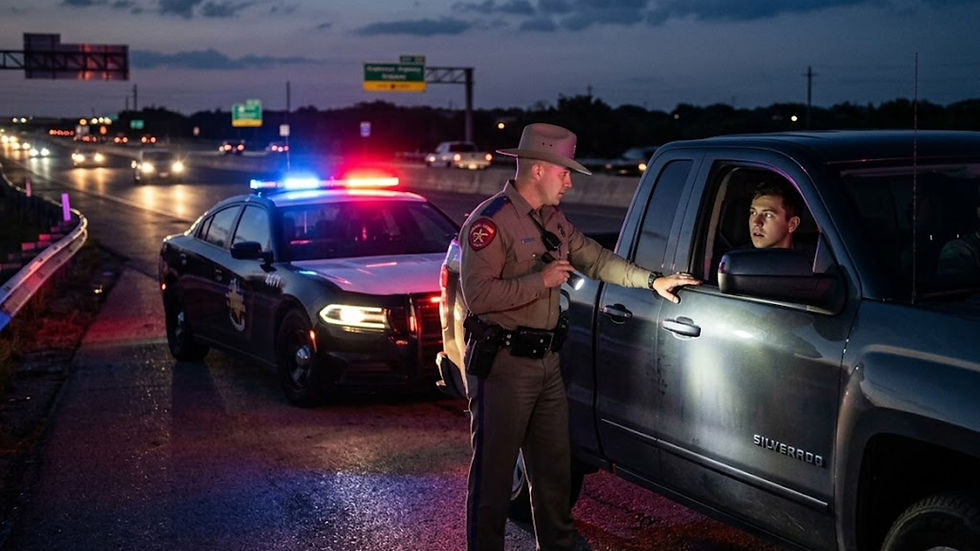
Texas suspends driving privileges for a defined list of offenses, and only some of those suspensions trigger a filing obligation. The Texas Department of Public Safety points to the Safety Responsibility Act, found in Texas Transportation Code Chapter 601, as the authority requiring certain suspended drivers to file an SR-22 in order to hold a license. Knowing which category you fall into determines what you owe and when the clock started.
Violations That Commonly Require a Filing
According to DPS guidance, convictions that require an SR-22 include but are not limited to the following:
Driving While Intoxicated, including first and repeat offenses
Certain drug offenses, even when no vehicle was involved in the arrest
Driving While License Invalid
Multiple convictions for operating without motor vehicle liability insurance
A suspension following a crash, or a civil judgment rendered against you after a crash
Placement of a security deposit with the Department as compliance for a crash or crash default suspension
The Exception Most Drivers Never Hear About
There is a narrow waiver worth knowing. If you were convicted of a second or subsequent violation for No Motor Vehicle Liability Insurance but you actually had valid coverage on the vehicle at the time of the offense, DPS will waive the SR-22 requirement. Your insurance company has to submit a letter on its own letterhead confirming coverage was in force on that date, sent by fax, email, or mail to the Driver Improvement division in Austin. DPS asks for 21 days to process that correspondence.
Pull your suspension notice before you buy anything. The letter identifies the violation, the length of the requirement, and the fee owed, and it is the single most useful document you can bring to an agent.
Who Qualifies for a Non-Owner Policy in Texas

Non-owner coverage is designed for a specific profile: a licensed or suspended Texas driver who does not own a vehicle and does not have regular access to one in the household. Carriers underwrite it that way on purpose. If you have steady access to a car, the insurer's exposure looks like an owner policy, and most will decline to write you a non-owner form.
You are generally a good candidate if all of these describe you:
No vehicle is titled or registered in your name
You do not live with someone whose vehicle you drive regularly
You drive borrowed or rented cars occasionally rather than daily
You have an active SR-22 obligation from DPS or a court order
You are probably not a candidate if you keep a relative's car at your address, drive a spouse's vehicle every day, or operate a company vehicle as your primary transportation. Misrepresenting that arrangement is a bad trade. A carrier that discovers the real situation after a claim can deny coverage, and a denied claim on a monitored filing puts your license right back where it started.
If You Buy a Car Mid-Requirement
Buying a vehicle while a non-owner SR-22 is on file is not a problem, but it does require a phone call. The policy has to convert to a standard owner policy with the new vehicle listed and the SR-22 filing carried over without interruption. Handle the conversion before the title transfers rather than after, because a registration in your name paired with a non-owner-only policy is a compliance gap waiting to be flagged.
How the Filing Process Works, Step by Step
The sequence matters more than the paperwork. Drivers who complete the steps out of order often pay a fee twice or wait weeks for a status that never updates.
Step 1: Confirm Your Status and What You Owe
Check your driver eligibility status through the Texas DPS License Eligibility system, or call DPS Customer Service to confirm the requirement, the start date, and the fees on your record. This tells you whether an SR-22 is genuinely required or whether your suspension falls into a category that does not need one. Do not rely on what a court clerk mentioned in passing.
Step 2: Buy a Compliant Non-Owner Policy
Choose a carrier that both writes non-owner business and files SR-22 certificates electronically with Texas. Set the liability limits at 30/60/25 or higher, and tell the agent up front that your license is currently suspended and that you do not own a vehicle. You will typically need your driver's license number, date of birth, and the details of the violation that triggered the requirement. Drivers who prefer to compare pricing before speaking with anyone can start with an instant online quote for non-owner coverage and bring the numbers into the conversation.
Step 3: Have the Carrier File the Certificate
Your insurer submits the SR-22 to DPS. Ask for written confirmation of the filing rather than assuming it happened, and keep the confirmation with your suspension notice. Electronic filing is faster than mail, though DPS still allows up to 21 business days on its end.
Step 4: Pay the Reinstatement Fee
DPS lists a $100 reinstatement fee that must be paid before your license is renewed or reissued, along with any other outstanding fees on your record. Payment can be made online, by mail, or in person. Paying the fee without a valid SR-22 on file accomplishes nothing, which is why this step comes fourth and not first.
Step 5: Verify Eligibility Before You Drive
Once compliance items are processed and your suspension period has ended, your driver eligibility status updates to show you are eligible. Confirm that status yourself before getting behind the wheel. Driving while your license is invalid in Texas is a criminal offense in its own right, and it can generate a brand new suspension on top of the one you were trying to clear.
The Two-Year Clock and Why Lapses Are So Expensive

A lapse in coverage is the most damaging mistake in this entire process. Texas requires the SR-22 to be maintained for two years without interruption, and your insurance provider is legally obligated to notify DPS the moment a policy is cancelled, terminated, or allowed to lapse. That notification is automatic. No one at the carrier decides whether to report it.
Here is what follows a lapse:
DPS receives the cancellation notice, typically within days
Your driving privilege and your vehicle registration can both be suspended again
A new SR-22 filing is required to restore eligibility
Another $100 reinstatement fee comes due
Additional enforcement actions or fees may apply for failing to maintain the certificate
The financial arithmetic is unkind. A missed $60 monthly payment can easily turn into a $100 reinstatement fee, a new filing fee, higher renewal pricing as a lapsed-coverage risk, and weeks without legal driving privileges. Setting up automatic payments is the single highest-return habit in this process, and drivers can manage recurring billing through flexible payment options that keep a policy from lapsing rather than relying on memory each month.
Also worth noting: a new conviction that requires an SR-22 can extend your requirement beyond the original end date. The two-year period is a minimum tied to your most recent qualifying event, not a fixed sentence that expires on schedule regardless of what happens next.
What a Non-Owner SR22 Covers and What It Does Not
A non-owner SR-22 policy in Texas covers bodily injury and property damage you cause to other people while driving a vehicle you do not own. It satisfies the state financial responsibility requirement and it keeps the certificate active with DPS. That is the full extent of the protection, and understanding the boundaries prevents an unpleasant surprise at claim time.
What it typically does not cover:
Physical damage to the borrowed or rented vehicle you were driving
Any vehicle titled or registered in your name
Vehicles owned by members of your household
Comprehensive and collision losses, since no vehicle is scheduled on the policy
Cargo, commercial use, or delivery driving unless specifically endorsed
Rental situations deserve a closer look. A non-owner policy usually extends liability coverage to a rental car, but it will not pay for damage to the rental itself. Rental companies sell a separate damage waiver for that exposure, and declining it while relying on a liability-only policy leaves a real gap.
What Non-Owner SR22 Coverage Costs in Texas
Non-owner SR-22 pricing in Texas breaks into two separate charges: a one-time filing fee for the certificate, which commonly runs between $15 and $50, and the underlying liability premium, which is where nearly all of the cost sits. Industry rate data from 2025 and 2026 puts typical non-owner SR-22 premiums in the range of a few hundred dollars per year for drivers with a single violation, well below comparable owner policies because no vehicle is being insured against physical damage.
Your actual number depends on a handful of underwriting factors:
The violation that triggered the filing, with DWI convictions carrying the largest surcharge
The number and recency of prior violations on your record
Your ZIP code, since urban Texas markets price higher than rural ones
Your age and the length of your licensing history
The carrier's individual appetite for high-risk business
Whether you choose state minimum limits or higher liability limits
Shopping matters more here than in standard auto insurance. Pricing spreads between carriers for the same high-risk driver are frequently wide, because non-standard and regional insurers rate these files very differently from national brands. Drivers evaluating agencies often find it useful to read what other Texas policyholders say about the filing experience before committing, since speed and accuracy of the filing affect how quickly a license comes back.
Mistakes That Delay Reinstatement
Most delays are procedural rather than financial. These are the patterns that come up again and again.
Buying a policy from a carrier that does not file SR-22 certificates in Texas. Confirm before you pay, because not all insurers offer the filing.
Submitting an insurance card instead of the certificate. DPS states plainly that a card or policy will not be accepted.
Paying the reinstatement fee first. The fee does not restore eligibility on its own if no valid certificate is on file.
Assuming the two-year clock starts at purchase. It runs from the conviction or judgment date, which usually works in your favor.
Cancelling the policy the day the requirement ends. Verify the end date with DPS in writing first, because your understanding and the state's record are not always aligned.
Letting a card expire on autopay. An expired card produces the same cancellation notice as a deliberate non-payment.
Keep Your Own Paper Trail
Save your suspension notice, your filing confirmation, your fee receipt, and every declarations page for the full two years and then some. If a record ever falls out of sync between your carrier and the state, the driver holding organized documentation resolves it in a phone call. The driver without it starts over.
Staying on Top of Non-Owner SR22 DPS Compliance in Texas

Compliance is a maintenance job, not a one-time transaction. Once the certificate is filed and the fee is paid, the entire remaining obligation is simply keeping the policy active and confirming the state agrees that you are current. Building three habits handles almost all of it.
Set the policy to draft automatically from an account you actually monitor, not one you top up occasionally. Check your driver eligibility status with DPS a few weeks after filing, then again around the midpoint of the two-year period, so a clerical problem surfaces early rather than at renewal. Re-shop your premium once a year, because rates for high-risk drivers move as violations age off your record and carriers adjust their appetite. Working with a specialist agency such as SR22 Savings, which handles Texas filings daily, tends to reduce the odds of a paperwork gap simply because the filing is routine rather than exceptional.
One caution on switching carriers mid-requirement. Overlap the policies by at least a day. Cancel the old policy before the new certificate is confirmed as filed and you create exactly the reportable gap the entire process is designed to prevent.
Frequently Asked Questions
Can you get an SR-22 in Texas if you do not own a car?
Yes. The Texas Department of Public Safety states directly that drivers without a vehicle are still required to file and maintain an SR-22, and it points those drivers to a Texas non-owner SR-22 insurance policy. Not owning a car changes the type of policy you buy, not whether you owe a filing.
How long do you need to keep a non-owner SR-22 in Texas?
Two years. The requirement runs for two years from the date of your most recent qualifying conviction, or two years from the date a judgment was rendered against you in a crash-related case. The period must be continuous, and failing to maintain it without a lapse can result in additional enforcement actions and reinstatement fees.
How much does non-owner SR-22 insurance cost in Texas?
Expect a one-time filing fee of roughly $15 to $50 plus the liability premium, which for many non-owner drivers with a single violation falls in the low hundreds of dollars per year as of 2026. A DWI conviction pushes premiums substantially higher, and pricing varies widely between carriers for identical driving records.
Does a non-owner SR-22 cover a car owned by someone in my household?
No. Non-owner policies specifically exclude vehicles owned by you and by members of your household. If you regularly drive a car belonging to a spouse, parent, or roommate, that vehicle needs to be insured on its own policy with you listed as a driver.
What happens if my non-owner SR-22 lapses before the two years are up?
Your insurer notifies the Texas DPS automatically when the policy is cancelled, terminated, or lapses. DPS can then suspend both your driving privilege and your vehicle registration, and restoring eligibility requires a new SR-22 filing plus another $100 reinstatement fee. There is no grace period built into the statute, so even a short gap is treated as a break in coverage.
The Bottom Line
The Texas DPS non-owner SR22 requirements are not complicated, but they are unforgiving about sequence and continuity. File a compliant non-owner policy at 30/60/25 limits through a carrier that submits the certificate electronically, pay the $100 reinstatement fee, confirm your eligibility status with the Texas Department of Public Safety, and then protect that policy for the full two years as if your license depends on it, because it does.
Drivers who treat the filing as a background utility rather than a monthly decision get through the period without incident. Set up autopay, keep your documentation, verify your status with DPS at least twice during the requirement, and re-shop your premium annually. SR22 Savings works with Texas drivers in exactly this position every day, and the difference between a two-year requirement and a four-year ordeal almost always comes down to whether the coverage stayed continuous.
Information in this article reflects Texas Department of Public Safety guidance and Chapter 601 of the Texas Transportation Code as published through 2026. Fee amounts and requirement periods are set by the state and can change, so confirm your specific obligation through the DPS License Eligibility system or by contacting DPS directly before making decisions about your coverage.
Comments