What Are the Top 5 Ways to Find the Cheapest SR22 Insurance Rates Available Today?
- 4 days ago
- 12 min read
The fastest way to find the cheapest SR22 insurance rates is to compare quotes from at least five carriers that actually file SR22 forms in your state, then buy through a broker who charges zero fees to set the policy up. That single step matters more than anything else, because two insurance companies can look at the exact same driver, the same violation, and the same ZIP code, and come back with prices that differ by more than 40%. The other four methods below stack on top of it. Together, they are the difference between paying $136 a month and paying $348 a month for coverage that satisfies the identical state requirement. If you are hunting for cheap SR22 insurance after a DUI, a suspended license, or a no insurance ticket, this guide walks through exactly where the savings hide.
Here is the part most drivers get wrong. The SR22 form itself is cheap. The violation behind it is what costs money. Once you understand that split, you stop trying to negotiate a filing fee and start attacking the thing that actually moves your premium.
What an SR22 Really Is, and Why Your Premium Jumped
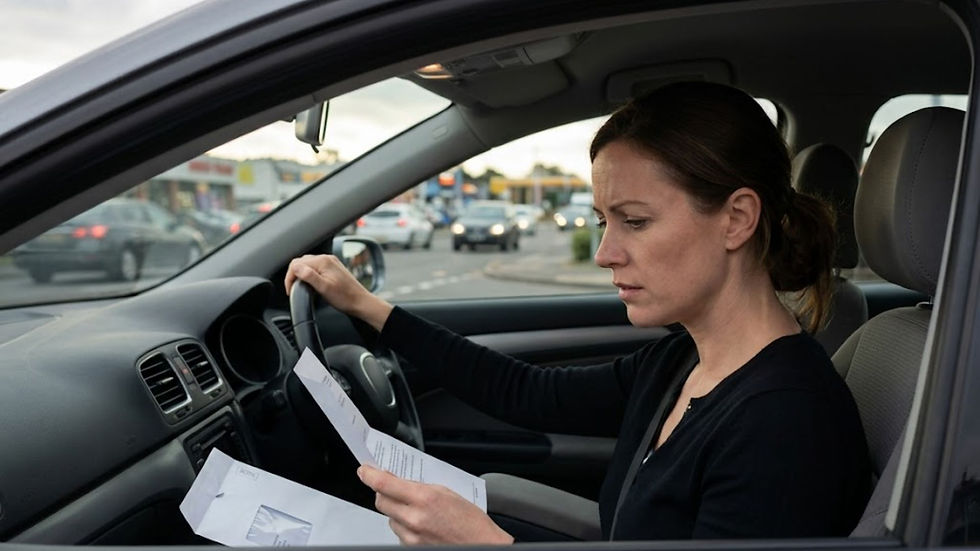
An SR22 is a certificate of financial responsibility that your insurance company files with your state motor vehicle department to prove you carry at least the state minimum liability coverage. It is not an insurance policy. It is not a type of coverage you can shop for on its own. It is a piece of paperwork attached to a policy you already own.
The filing fee is small. According to Insure.com's May 2026 analysis, the SR22 processing fee ranges from $15 to $50, with $25 being the typical charge. That fee is one time, paid when the policy starts.
Your rate increase comes from somewhere else entirely. WalletHub's May 2026 review of 26 major insurers found that the SR22 requirement itself raises a premium by up to 18%. The DUI, reckless driving conviction, or coverage lapse on your record is doing the rest of the damage. This is why drivers who focus only on the filing fee end up overpaying by hundreds of dollars a year.
Three violations trigger most SR22 requirements in the United States:
DUI or DWI convictions, including OVI in Ohio
Driving with a suspended or revoked license
Causing an accident while uninsured, or getting cited for no insurance
You will also see the FR-44 form in Florida and Virginia. It works like an SR22 but requires higher liability limits, which makes it more expensive. Everything in this guide still applies, you are just working from a higher starting number. Before you compare a single quote, it helps to know which SR22 filing options apply to your situation, because an owner policy and a non owner policy are priced on completely different math.
What SR22 Insurance Actually Costs in 2026
Average SR22 insurance in 2026 runs between $114 and $348 per month depending on your violation, your carrier, and your state. That spread is enormous, and it is the reason comparison shopping pays so well in this corner of the market.
Here is what the current data shows.
Cost item | 2026 figure | Source |
Cheapest nationally available SR22 carrier | GEICO at $136 per month, minimum coverage | MoneyGeek, 2026 |
Cheapest regional SR22 carrier | Erie at $114 per month, 36% below the national average | MoneyGeek, 2026 |
SR22 rate after a minor at fault accident | $64 per month | MoneyGeek, 2026 |
SR22 rate after a hit and run conviction | $188 per month, roughly 3x the minor accident rate | MoneyGeek, 2026 |
Average policy cost with one DUI conviction | $348 per month, or $4,174 per year | Insure.com, May 2026 |
Non owner SR22 insurance average | $75 per month | MoneyGeek, June 2026 |
One time SR22 filing fee | $15 to $50, typically $25 | Insure.com, May 2026 |
Premium increase caused by the SR22 requirement alone | Up to 18% | WalletHub, May 2026 |
Notice the gap between $64 and $188. Same form, same state requirement, wildly different price. Your violation type sets the floor. The five methods below determine how close to that floor you actually land.
State location matters just as much. MoneyGeek's 2026 state analysis found the cheapest carrier in Connecticut priced 48% below the state average, and California's cheapest carrier came in 45% below its state average. In tighter markets like Alaska, the best carrier was only 7% below average. Translation: in most states, picking the right company is worth more than any other single decision you make.
Way 1: Compare Quotes From at Least Five Carriers That File SR22s

Comparing five or more quotes is the highest return action available to any high-risk driver, and it costs nothing but time. Insurance companies do not price violations the same way. One carrier treats a three-year-old DUI as a moderate risk. Another treats it as an automatic decline. You cannot know which is which without asking.
Why the Same Driver Gets Five Different Prices
Every insurer runs its own rating formula. They weigh your age, ZIP code, credit-based insurance score, vehicle, annual mileage, and the age of the violation differently. Quote.com's June 2026 data showed drivers with poor credit seeing the largest increases from Allstate and Farmers, while GEICO, Erie, and State Farm stayed competitive across credit tiers.
There is a second filter most drivers miss. Not every insurance company files SR22 forms, and some that do will not file in every state. Allstate, Liberty Mutual, and Farmers price SR22 risk higher and decline it outright in certain states. Asking one question up front, "do you file SR22s in my state," saves you from three wasted applications.
Use these rules when you compare:
Get at least five quotes, using your exact ZIP code rather than your city
Quote the same liability limits at every carrier, or the comparison is meaningless
Ask each carrier whether the filing fee is included or billed separately
Include at least two high-risk specialists, not just the big national names
Confirm the carrier can file the same day, not in five business days
Nine or ten quotes is better than five. This is also where a broker earns their keep, which brings us to the next method.
Way 2: Buy Through a Zero Fee Broker That Specializes in Cheap SR22 Insurance

A specialized broker will almost always beat a direct quote, for two reasons: access and fees. Brokers who focus on cheap SR22 insurance work with non-standard carriers that do not advertise on television and do not appear in most online comparison tools. Companies like Dairyland, Infinity, Mendota, Aspire, and National General build their business around drivers with violations, and they frequently underprice the household names on high-risk policies.
The second reason is the one that hits your wallet on day one. Most agencies charge a broker fee of $100 to $300 just to start an SR22 policy. That fee is pure setup cost. It buys you nothing in coverage. SR22 Savings charges $0 in broker fees, which means the entire down payment goes toward your actual premium instead of paperwork.
Do the Math on the Down Payment, Not Just the Monthly Rate
High-risk policies are quoted two ways: monthly premium and down payment. Drivers get burned when they compare only the monthly figure. A policy at $95 a month with a $250 broker fee costs more in the first two months than a policy at $110 a month with no fee at all.
Before you commit, look at what other drivers in your situation actually experienced. Reading verified reviews from drivers who filed recently tells you whether the price quoted was the price paid, and whether the filing reached the DMV on time. Speed matters here, because your license stays suspended until the state receives the form.
An independent captive agent can only show you one company's price. An independent broker can show you fifteen. That is the whole argument.
Way 3: Match the Policy Type to How You Actually Drive

Choosing the right policy type can cut your cost roughly in half, and most drivers never learn the option exists. If you do not own a vehicle, a non owner SR22 policy satisfies the same state requirement as a full auto policy for a fraction of the price.
MoneyGeek's June 2026 analysis put the average non owner SR22 policy at $75 per month. Compare that to $348 per month for a driver with a DUI on a standard owner policy, and the savings are obvious. The reason is simple. A non owner policy covers your liability when you borrow a car. It does not insure a specific vehicle, so there is no comprehensive or collision exposure to price.
When a Non Owner SR22 Is the Cheaper Choice
A non owner SR22 policy fits you if any of these apply:
You sold your car after the suspension, or never owned one
You borrow vehicles occasionally from people outside your household
You need the filing purely to get your license reinstated
You drive a company vehicle covered by an employer policy
There are real limits. A non owner policy will not cover a car registered to you, registered to a family member, registered at your home address, or one you have regular access to. If you drive the same car every day, this is not your option, no matter how attractive the price looks.
If you do own a car, the cheapest structure is usually state minimum liability on an older vehicle with no comprehensive or collision coverage. Adding a higher deductible on the coverage you keep pushes the premium down further. You can compare both policy types side by side in an online quote and see the real dollar difference for your driving record before you decide anything.
Way 4: Stack the Discounts High-Risk Drivers Still Qualify For

You lose safe driver discounts after a violation, but you keep almost everything else, and those remaining discounts are worth 15% to 30% combined. Experian's guidance on this point is direct: many savings opportunities have nothing to do with driving behavior, so ask about every one of them.
These are the discounts that still apply to SR22 drivers:
Pay in full. Paying six or twelve months up front eliminates installment fees and typically saves $50 to $100 per year.
Autopay and paperless. Usually worth $5 to $10 per month, with no downside.
Defensive driving or DUI education courses. Progressive offers one of the strongest defensive driving discounts in the market at up to 30%. If your court order already requires an alcohol education program, ask your carrier to apply it.
Telematics. Programs that track braking, speed, and mileage can return up to 20% if you drive carefully. Erie's YourTurn and Progressive Snapshot are two examples.
Multi vehicle and bundling. GEICO's multi vehicle discount runs about 25%. Bundling renters or home coverage sometimes helps, though not always, so run the numbers instead of assuming.
Higher deductibles. Raising your deductible lowers your monthly premium, but only take the savings if you could actually cover the deductible after an accident.
Credit improvement. Most states allow credit-based insurance scores in rating. Quote.com's 2026 data showed poor credit adding more than $100 per month to SR22 coverage.
Two or three of these together often beat a small difference in base rate. Ask every carrier for its full discount list rather than waiting to be offered one.
Way 5: Protect the Filing, Then Requote Every Six Months

The most expensive mistake in this entire process is letting your policy lapse, and it has nothing to do with price shopping. If your SR22 policy cancels, your insurer notifies the DMV, and your license gets suspended again. In many states the required filing period restarts from zero.
Washington offers a clear example. According to MoneyGeek's 2026 Washington analysis, the state requires SR22 filing for three years from your reinstatement eligibility date, and a coverage lapse restarts the clock with no grace period. Ohio works the same way, where a lapse resets the timer and triggers immediate re-suspension. One missed payment can turn a three-year requirement into a six-year one.
Protect the filing with three habits:
Set up autopay so a forgotten due date cannot cancel the policy
Never cancel an old policy until the new carrier has confirmed the filing went through
Keep your own copy of the filing confirmation, and note the exact end date of your requirement
Keeping payments current is the single cheapest form of insurance you can buy, which is why having a simple way to handle your policy payments on time each month protects your license more effectively than any discount ever will.
Requote as the Violation Ages
Your risk profile improves every month you go without a new violation. Rates that were unavailable at month one often open up by month twelve. Requote at every six-month renewal, and again as soon as your violation crosses the two-year and three-year marks. Loyalty discounts tend to disappear after serious violations, so staying put out of habit usually costs money.
Also remember this: your carrier will not remove the SR22 automatically when your term ends. You have to ask. Then requote immediately, because the "high-risk" label often comes off the same day the filing does.
How Your State Changes the Math
SR22 rules are set at the state level, and the duration directly controls your total cost. Three years is the most common requirement, but the range runs from one year to five years or more.
Three years is standard in most states, including California, Washington, and Ohio
Texas requires two years
Georgia, Kansas, and North Dakota can require as little as one year
Ohio can require five years for repeat offenders
California can extend to as long as ten years for the most serious violations, such as certain reckless driving convictions
Eight states do not run an SR22 program at all: Delaware, Kentucky, New Jersey, New Mexico, New York, North Carolina, Oklahoma, and Pennsylvania
City-level pricing swings hard too. In Ohio, MoneyGeek found minimum coverage SR22 rates ranging from $59 per month in Bolivar to $100 per month in Toledo and Cincinnati, a $41 monthly spread inside one state. California shows the same pattern, and drivers researching the cheapest SR22 options in the Sacramento market will find that local carrier availability changes the answer considerably from what a national average suggests.
The clock usually starts the day your insurer files the certificate, not the day of your conviction. That is one more reason to file fast.
Costly Mistakes That Keep Drivers Overpaying
Most drivers who overpay for SR22 coverage make one of these six mistakes:
Accepting the first quote, usually from their existing carrier
Paying a $100 to $300 broker fee without asking whether it is negotiable or avoidable
Buying an owner policy when a non owner policy would satisfy the state
Carrying comprehensive and collision coverage on a vehicle worth less than $3,000
Canceling the old policy before the new filing is confirmed, creating a lapse
Never requoting after the first year, when rates typically start improving
Every item on that list is fixable in an afternoon.
Frequently Asked Questions
Which insurance company has the cheapest SR22 insurance?
There is no single cheapest company for every driver. MoneyGeek's 2026 analysis found Erie cheapest at $114 per month where it operates, and GEICO cheapest among nationally available carriers at $136 per month. WalletHub's 2026 review named GEICO and AAA as the cheapest overall, with GEICO averaging $512 per year. Regional carriers such as Wawanesa in California, Auto-Owners, and COUNTRY Financial often undercut all of them in specific states, which is why quoting five or more carriers beats picking a name off a list.
How much does an SR22 filing add to your car insurance?
The filing itself adds $15 to $50 one time, with $25 being typical, plus a premium increase of up to 18% according to WalletHub's May 2026 analysis. The violation behind the SR22 causes the much larger increase. Insure.com's 2026 data shows a driver with one DUI conviction paying about $348 per month, compared with a national average well under half that for drivers with clean records.
Can you get an SR22 without owning a car?
Yes. A non owner SR22 policy provides liability coverage for borrowed vehicles and satisfies the state filing requirement without a car in your name. It averaged $75 per month in MoneyGeek's June 2026 analysis, making it the least expensive route to license reinstatement for drivers who do not own a vehicle. It will not cover a car registered to you, to a household member, or to your address.
How long do you have to keep an SR22 on file?
Most states require three years of continuous coverage, though the range runs from one year to five years or longer depending on the state and the severity of the violation. Texas requires two years. Ohio can require five for repeat offenders. The requirement is measured in continuous coverage, so a lapse can restart the entire period from the beginning.
Does your insurance rate go down when the SR22 comes off?
Usually yes, but not always immediately, and not automatically. Your insurer will not drop the SR22 endorsement unless you ask, so contact them the day your requirement ends. The underlying violation can stay on your driving record for five to ten years and continue affecting your rate after the filing is removed, which is why requoting at that point is essential rather than optional.
Finding the Cheapest SR22 Insurance Rates Comes Down to One Comparison
The top ways to find cheap SR22 insurance are not complicated: compare five or more carriers that file in your state, buy through a broker that charges no setup fee, match the policy type to how you actually drive, stack every discount you still qualify for, and protect the filing so you never restart the clock. Those are the best methods to lower SR22 cost, and they work in every state that runs an SR22 program.
The numbers make the case on their own. The gap between the cheapest and most expensive SR22 quote for the same driver regularly exceeds $200 per month. Over a standard three-year filing period, that is more than $7,000. No discount, no deductible adjustment, and no coverage tweak comes close to the savings available from simply asking more companies.
SR22 Savings has completed more than 15,000 SR22 filings across California, Arizona, Nevada, Texas, Washington, Ohio, North Dakota, South Dakota, and Wyoming, with same-day electronic filing and no broker fees. If your license is sitting suspended right now, the fastest path forward is a single comparison across multiple carriers, filed the same day, at the lowest rate your record allows.
Comments