What Are the 7 Most Common Reasons SR22 Insurance Costs More Than It Should?
- 3 days ago
- 12 min read
SR22 insurance costs more than it should for seven fixable reasons: staying with a carrier that penalizes the filing, skipping quote comparison, buying the wrong policy type, letting coverage lapse, keeping the filing active after the state requirement ends, insuring the wrong vehicle at the wrong coverage level, and missing discounts and low cost payment options. None of those seven have anything to do with the SR22 form itself. The form costs between $15 and $50 to file, according to 2026 pricing data from Insurance.com and MoneyGeek. Everything else on your bill is a pricing decision, and pricing decisions can be challenged, which is exactly why cheap SR22 insurance is still realistic even after a serious violation.
Here is the part most drivers never hear from their agent. Two people with the same violation, the same state, and the same car can pay premiums that differ by more than $1,000 a year. That gap is not luck. It comes from a handful of specific choices made in the first thirty days after a license reinstatement, and most of those choices are still reversible today.
The Short Answer on Why SR22 Costs Too Much
The SR22 is not a type of insurance and it is not the thing raising your rate. It is a one page certificate of financial responsibility that your insurance company files with your state motor vehicle agency to confirm you carry at least the state minimum liability coverage.
Your premium jumps because of the conviction sitting behind that certificate. Insurance.com's May 2026 analysis found that drivers who need an SR22 pay an average of $1,511 more per year for auto insurance. Insurance Navy's 2026 data puts the average annual SR22 premium at $3,877, close to double the cost of a standard policy.
So the real question is not why the certificate is expensive. The question is how much of your specific bill is the unavoidable consequence of a conviction, and how much is avoidable overpayment stacked on top of it. In our experience, the avoidable portion is usually between 20% and 40%.
What SR22 Insurance Actually Costs in 2026

Before diagnosing your own bill, it helps to see the real numbers. Rates swing hard by state, by carrier, and by policy type, which is the clearest evidence that no single price is fixed.
Cost Element | 2026 Figure | Source |
SR22 filing fee | $15 to $50, one time per filing | Insurance.com, MoneyGeek 2026 |
Average annual SR22 premium | $3,877 | Insurance Navy 2026 |
Average annual increase from an SR22 | $1,511 | Insurance.com, May 2026 |
Typical rate increase percentage | 40% to 90% | Quote.com 2026 |
Most expensive state | California, roughly $5,500 to $7,806 per year | Insurance Navy, Ocho 2026 |
Least expensive states | New Hampshire $2,285, Idaho near $2,100 | Insurance Navy, Ocho 2026 |
Non owner SR22 policy range | $600 to $1,800 per year | Ocho 2026 |
Standard filing period | 3 years in most states, 1 year in Georgia and Kansas, up to 5 years in Ohio | MoneyGeek 2026 |
Typical savings from comparing 3+ carriers | $300 to $800 per year | MoneyGeek 2026 |
Look at the last row carefully. The gap between shopping and not shopping is often larger than the entire filing fee multiplied across three years. That single line explains most of the overpayment we see.
Reason 1: Your Current Insurer Is Punishing the Filing Instead of Pricing the Risk

Not every insurance company wants SR22 business, and the ones that do not want it price accordingly. Some major carriers refuse SR22 filings outright. Others will file the certificate but attach a surcharge that has more to do with discouraging you than with your actual claim probability.
This is the single biggest of the SR22 price factors drivers miss. When a standard carrier reluctantly keeps a high risk driver, that driver becomes an outlier in a book of business built around clean records. The math punishes outliers. A carrier that specializes in high risk drivers, by contrast, has thousands of similar profiles to price against and can be far more precise.
MoneyGeek's 2026 carrier comparison shows how wide the spread gets:
GEICO: roughly $136 per month nationally for SR22 liability coverage, about 18% below the national average
Travelers: roughly $114 per month for full SR22 coverage
Progressive: $144 to $153 per month depending on state
State Farm non owner SR22: roughly $33 per month, or $396 per year
Allstate, Liberty Mutual, and Farmers: consistently priced higher, and in some states they decline SR22 risk entirely
Same driver. Same violation. Four times the price depending on who answers the phone. If you called your existing insurer, accepted their number, and never looked further, you are almost certainly paying a loyalty penalty rather than a risk premium, and this is where working with a broker built specifically around SR22 filings changes the outcome, because the comparison happens across carriers that actually want the business.
Reason 2: You Accepted the First Quote and Never Compared

Most drivers get exactly one SR22 quote. That is the most expensive habit in this entire process.
Your final price depends less on your driving record than on how many carriers actually evaluated that record. MoneyGeek's 2026 analysis found that quotes from three or more companies typically save drivers $300 to $800 per year. Money Atlas reported in June 2026 that the difference between the highest and lowest SR22 quote for the same driver can easily exceed $1,000 annually.
Why the Spread Is So Wide
Every insurer builds its own rating model. Two carriers looking at the same DUI conviction can reach completely different conclusions about what it predicts.
One carrier may weight the conviction heavily for five years, another for three
One may care about your credit based insurance score, another may be barred from using it in your state
One may treat a first offense as a temporary lapse in judgment, another as a permanent pattern
One may already have a profitable book of SR22 policies, another may be trying to shrink that exposure
None of that is visible from the outside. The only way to find out is to collect real quotes, side by side, in the same week so the underwriting conditions match. Drivers who pull a full set of SR22 quotes in one sitting consistently find a lower number than drivers who call one company and stop, and the whole comparison takes less time than a trip to the motor vehicle office.
Reason 3: You Bought an Owner Policy When a Non Owner Policy Would Satisfy the State
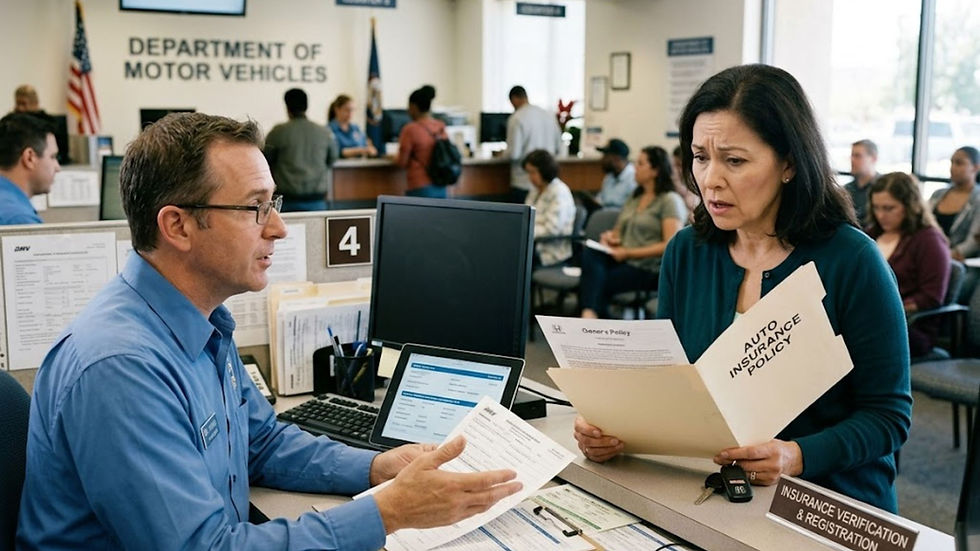
A non owner SR22 policy costs between $600 and $1,800 per year, compared to $1,800 to $5,600 for a standard SR22 policy tied to a vehicle. That is one of the largest single line savings available in high risk insurance, and thousands of drivers pay the higher amount without knowing the cheaper option exists.
A non owner policy provides liability coverage that follows you rather than a car. It satisfies the state financial responsibility requirement and keeps the filing active. It exists precisely for drivers who sold their vehicle during a suspension, which is an extremely common situation.
When a Non Owner Policy Works
It fits if all of the following are true:
You do not own a vehicle
Nobody in your household owns a vehicle you have regular access to
You are not required to install an ignition interlock device
You only drive occasionally, usually a borrowed car
When It Does Not
It does not fit if you own a car, if a spouse or roommate owns a car parked at your address, or if a court order specifically requires vehicle level coverage. Filing the wrong policy type creates a compliance gap, and compliance gaps cost far more than the premium difference ever saves.
The logic behind the discount is straightforward. Less time behind the wheel means fewer opportunities to file a claim, and insurers price that reduced exposure honestly.
Reason 4: A Single Coverage Lapse Restarted Your Clock

One missed payment can add years to your filing period and hundreds of dollars per month to your premium. This is the most damaging of the reasons SR22 insurance is expensive, because the penalty compounds silently.
When your policy cancels or lapses, your insurer is legally obligated to notify the state, usually through a form called an SR26. Insurers must report the lapse within roughly 10 days in most states. The motor vehicle agency then suspends your license again, and in many states your filing period restarts from zero.
Now stack the consequences:
Your license is suspended a second time, which is its own new violation on your record
Your three year filing clock resets, so you pay high risk rates for longer
You owe a fresh reinstatement fee to the state
You owe a second filing fee to the carrier
Your next quote reflects two events instead of one
A $90 missed payment routinely turns into $3,000 of additional cost through that chain. The defense is unglamorous and completely effective: autopay, a payment date aligned with your paycheck, and a payment plan you can actually sustain for the full term. Drivers who set up a billing schedule that matches their real cash flow almost never trigger an SR26, and that alone protects the biggest number on the page.
Reason 5: The Filing Stayed Active After the State Stopped Requiring It
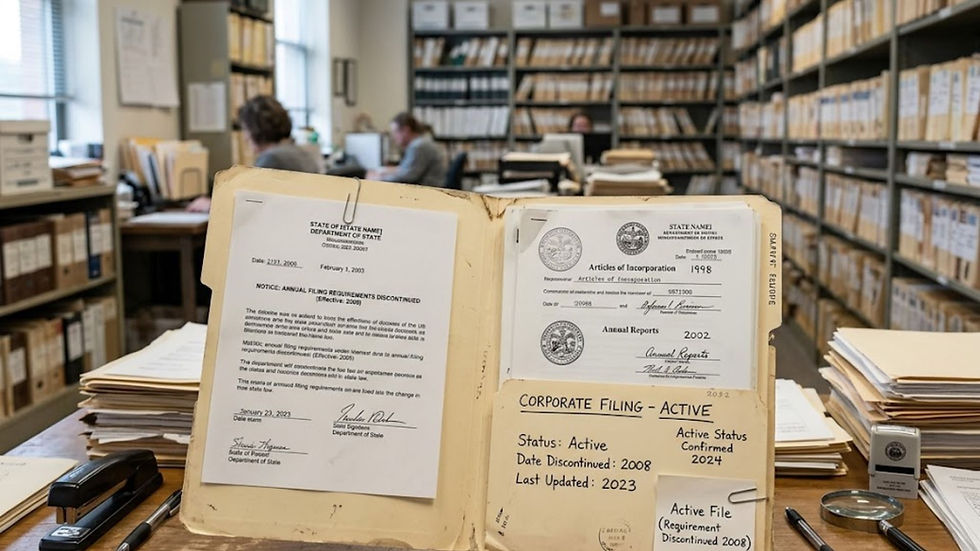
Your SR22 does not fall off automatically. Nobody at the motor vehicle agency calls to congratulate you, and your insurer often does not know your exact completion date. Drivers regularly pay high risk rates for months after the legal requirement ended.
Removing the filing eliminates the SR22 classification surcharge. For drivers with a DUI, that removal typically reduces premiums by 20% to 40% based on 2026 carrier data, with further reductions as the underlying violation ages off the record. For most DUI convictions, that aging process takes five to ten years from the violation date.
The Removal Sequence
Follow it in this order, because doing step three too early causes the exact lapse described above.
Confirm your official completion date with your state motor vehicle agency, in writing
Verify that you had no coverage gap during the entire filing period
Ask your insurer to file the SR26 completion notice, only after the state confirms
Get written confirmation from both the state and the carrier
Re quote your coverage as a standard driver, not as an SR22 driver
Step five matters more than step three. Removing the filing changes your classification, but your existing carrier may not reprice you aggressively on its own. A driver who has been reading the practical tactics for finding the lowest available SR22 rates will already know that the moment your classification changes is the single best moment to re shop the entire policy.
One caution worth stating plainly. You cannot end the filing early because you have driven safely. Two clean years out of three does not shorten a statutory requirement. Early cancellation is treated as a lapse and re suspends your license.
Reason 6: Your Vehicle and Coverage Choices Are Working Against You

The car in your driveway can add or remove hundreds of dollars a year from an SR22 premium, independent of your record. High performance engines, newer model years, luxury trims, and expensive replacement parts all raise the number.
Coverage level compounds the effect. A full coverage policy carries the highest maximum payout, and 2025 to 2026 increases in labor, parts, and repair costs have pushed full coverage pricing up across the entire market. Liability only coverage costs considerably less because it covers fewer risks.
Three adjustments that produce real reductions:
Drive a reliable older vehicle during the filing period rather than a new or high performance model
Raise your deductible if you have enough savings to absorb the out of pocket amount in a claim
Drop comprehensive and collision on a vehicle whose market value no longer justifies the premium, which is usually the case once a car falls below roughly ten times the annual cost of that coverage
Be honest about the tradeoff. Dropping physical damage coverage on a car you cannot afford to replace is not a saving, it is a transferred risk. Make the cut only where the math genuinely supports it. Drivers who want to see how this plays out for people in similar situations often find the experiences other SR22 customers have shared more useful than a generic coverage calculator, because the details of a real case tend to match their own.
Reason 7: You Are Missing Discounts and Paying Avoidable Billing Fees

High risk drivers still qualify for discounts, and most never ask. Insurers rarely apply them automatically.
Discounts commonly available on SR22 policies include:
State approved defensive driving or traffic safety course completion
Multi policy bundling with renters or homeowners coverage
Paid in full discounts instead of monthly installments
Electronic funds transfer and paperless billing credits
Low annual mileage
Telematics or safe driving monitoring programs, where offered
Then there is the billing structure itself, which is where quiet money leaks out. Monthly installment fees of $5 to $10 add $60 to $120 a year. A large required down payment can push drivers toward a shorter term policy that reprices sooner and higher. Some carriers charge a separate fee every time the SR22 is refiled, which is triggered by a vehicle change, a carrier switch, or a lapse.
There is also a timing element people overlook. Rates for high risk drivers tend to soften after 12 to 18 months of clean driving, well before the filing period ends. Most drivers wait for the three year mark to re shop. The drivers who re shop at the 12 month mark capture that improvement a year and a half earlier.
How to Audit Your Policy and Find Cheap SR22 Insurance
Cheap SR22 insurance comes from auditing seven specific line items, not from hoping your rate drops on its own. Work through this list with your current declarations page in front of you. It takes about twenty minutes and it tells you exactly where your money is going.
The Seven Point Audit
Carrier fit: Does your insurer specialize in high risk drivers, or is it tolerating you? Compare its quote against two specialists.
Quote count: How many carriers priced your record in the last twelve months? If the answer is one, you have not tested your rate.
Policy type: Do you own a vehicle? If not, price a non owner policy immediately.
Lapse protection: Is autopay active, and is the draft date aligned with your income?
Filing status: Do you know your exact completion date in writing from the state?
Vehicle and coverage: Does your car and coverage level match the filing period, or the life you had before it?
Discounts and billing: Which discounts are applied on your declarations page, and what are you paying in installment fees?
At SR22 Savings, this is the same sequence we walk through with drivers who arrive convinced their rate is fixed. It rarely is. The most common finding is that two or three of the seven items are quietly costing money at the same time.
What Realistic Improvement Looks Like
Set expectations correctly, because overpromising here is how drivers get sold bad policies.
Removing avoidable overpayment usually recovers 20% to 40% of the premium
Removing the underlying violation surcharge is not possible until it ages off your record
The largest single improvements come from carrier switching and correcting the policy type
The smallest improvements come from discounts, which still matter because they compound over three years
An honest agent will tell you which of those categories your savings falls into. SR22 Savings works from actual filing rules and current carrier appetite rather than a generic promise, because a quote that cannot be bound is worth nothing.
Frequently Asked Questions
Does an SR22 itself make my insurance expensive?
No. The SR22 filing fee is a one time charge of $15 to $50 depending on your state and carrier. Your premium increases because of the violation that triggered the filing requirement, most often a DUI, driving without insurance, reckless driving, or repeated traffic offenses. Insurance.com's 2026 data attributes an average increase of $1,511 per year to the SR22 driver classification, not to the paperwork.
How long do I have to carry an SR22?
Most states require three years of continuous coverage. Georgia and Kansas require one year. Ohio can require up to five years. Texas requires two years under Transportation Code 601.231. The clock generally starts at license reinstatement rather than at conviction, which is one of the most commonly misread details in the entire process, and misreading it causes drivers to cancel early and restart the requirement.
Will my rates go down as soon as the SR22 is removed?
Your rate drops at your next renewal date, not necessarily the same day. Removing the filing eliminates the SR22 classification surcharge, typically reducing DUI driver premiums by 20% to 40%. The underlying violation stays on your record and continues affecting your rate until it ages off, usually five to ten years after a DUI. Ask your insurer whether it can apply the change mid term rather than waiting for renewal.
Can I switch insurance companies while I have an SR22?
Yes, and it is often the fastest way to lower your cost. The requirement is that the new carrier files your SR22 before the old policy cancels, with zero gap between them. Confirm the new filing has been accepted by the state before allowing the previous policy to end. Any gap generates an SR26 cancellation notice, which suspends your license and can restart your filing period.
Is non owner SR22 insurance cheaper than a regular SR22 policy?
Yes. Non owner SR22 policies run $600 to $1,800 per year compared to $1,800 to $5,600 for a policy tied to a vehicle, based on 2026 market data. State Farm's non owner SR22 averages about $33 per month. You qualify only if you do not own a vehicle and no one in your household owns one you regularly access. If you buy a car later, you can add it to the policy, though your premium will rise to reflect the vehicle.
The Bottom Line
Cheap SR22 insurance is not a marketing promise, it is the result of auditing seven specific things and fixing the ones that are wrong. The filing fee was never the problem. The problem is a carrier that does not want your business, a rate nobody ever compared, a policy type that does not match your life, a payment date that invites a lapse, a filing that outlived its requirement, coverage sized for a different situation, and discounts nobody applied.
Your driving record is fixed history. Your premium is a live decision, repriced every renewal, by companies that disagree sharply about what your record actually means. Drivers who treat it that way pay hundreds less per year than drivers who treat their first quote as a verdict.
Start with the two items that move the most money. Get real quotes from at least three carriers that actively want SR22 business, then confirm your exact filing completion date in writing with your state. Those two steps take one afternoon and they resolve most of the gap between what you pay now and what you should be paying.
Comments